
Moods Investments Portfolio Performance Analysis FY 2024

 
Here is a detailed breakdown of Moods Investments Portfolio performance from January 1, 2024 – December 31, 2024:
 
Overall Performance and Strategy
 
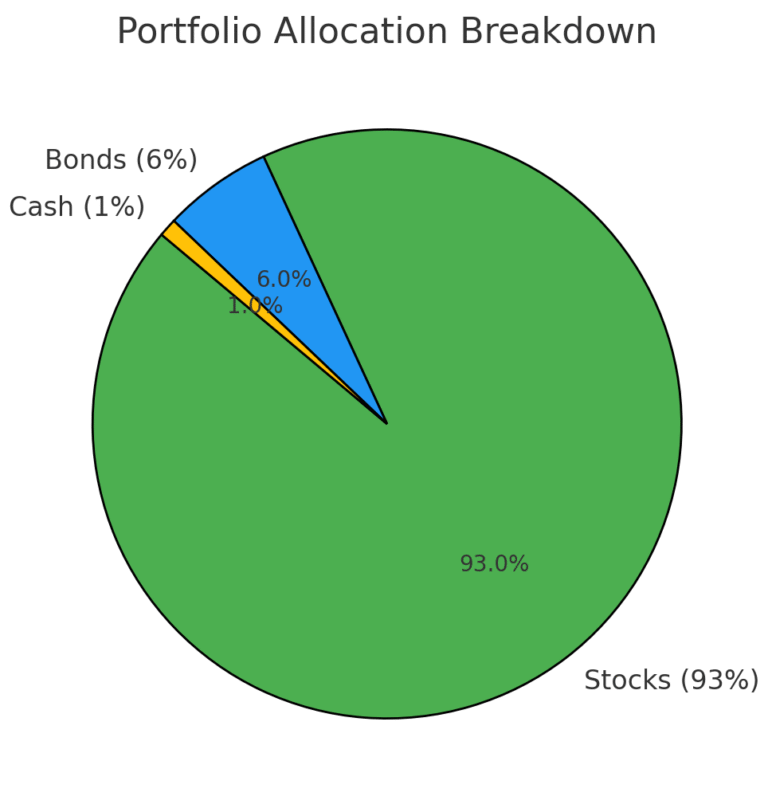
The portfolio saw a strong 17.74% return in 2024. However, it underperformed the benchmark S&P 500’s total return of 25.0%, which was predominantly driven by the Magnificent 7 stocks in  2024. Despite this underperformance, it still suggests a successful year in terms of growth, primarily fuelled by a growth-focused strategy with a heavy allocation towards stocks (93%). However, this aggressive approach also involved some risks, which we’ll explain further.
 
Asset Allocation
 
Stocks: The vast majority of the portfolio was in stocks, which shows a high-growth, high-risk appetite. The portfolio included tech stocks like Alphabet (GOOGL) and Berkshire Hathaway (BRK.B), and also Chinese stocks such as PetroChina and BYD Co Ltd. This diversification across sectors and geographies is good, but it also means being exposed to more variables.
 
Bonds: A small 6% allocation to bonds provided minimal income and stability, which was a conscious choice to prioritize growth over security.
 
Cash: A very small 1% in cash, which indicates that almost all available capital was deployed, with some potentially used for margin trading. This can be great when markets are up, but it also means less flexibility in a downturn, and this needs to be addressed.
 
Top Performers and Losers
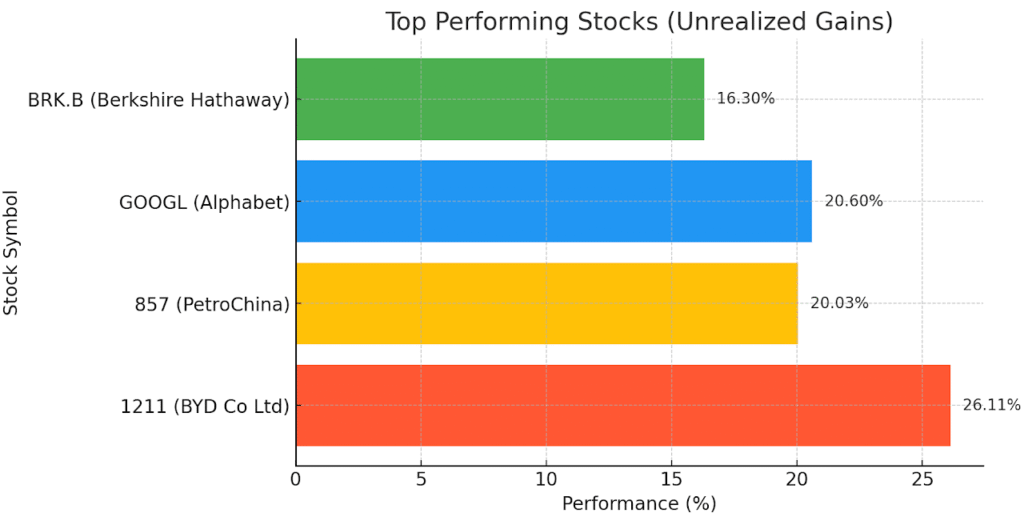
  • Winners: The tech sector and Chinese stocks were the stars of the show. Alphabet and Berkshire Hathaway performed exceptionally well. Similarly, PetroChina and BYD benefited from growth in the energy and EV sectors. These strong gains point to smart stock picks in those areas.
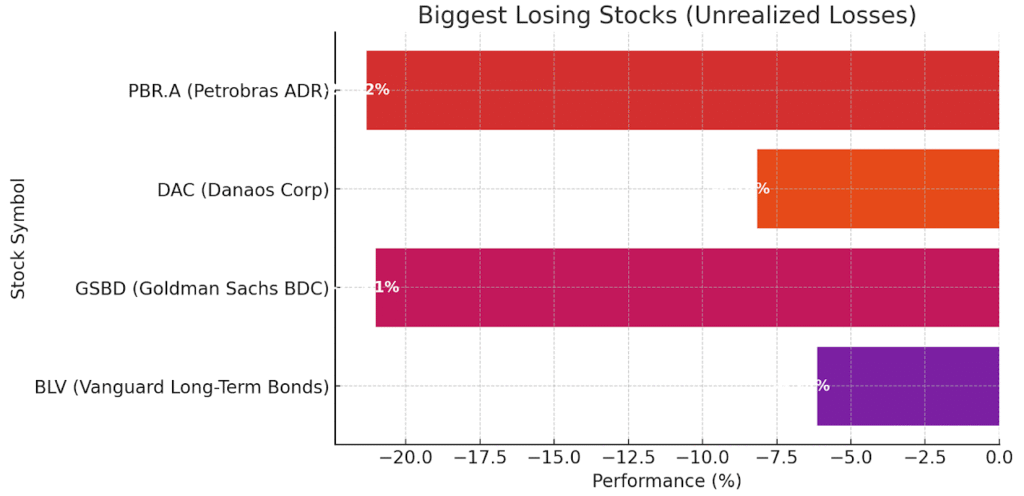
  • Losers: On the other hand, Petrobras (PBR.A) and Goldman Sachs BDC (GSBD) suffered significant losses. Danaos Corp (DAC) also underperformed. The losses in Petrobras were due to oil price volatility, and Danaos Corp was impacted by global trade slowdowns and fluctuating freight rates. It’s also worth noting that the Vanguard Long-Term Bonds ETF (BLV) declined, indicating that rising interest rates negatively impacted bond prices. These losses highlight the importance of monitoring commodity trends and interest rate changes.
 
Income and Returns
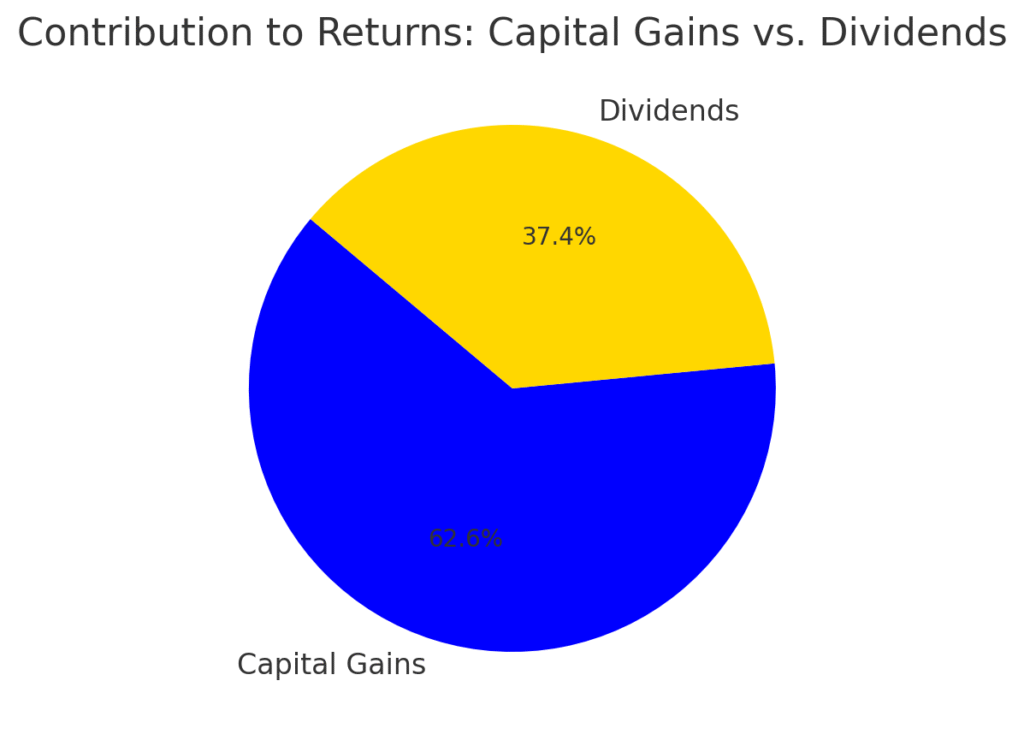
  • Capital Gains made up 62% of the total returns, confirming that growth stocks were the primary engine of performance.
  • Dividends were a significant 38% of the return, which added a nice layer of stability and cash flow. It’s good to see dividends playing a significant role in overall returns, especially given the potential tax benefits.
 
Risks and Challenges
  • Options Trading: Major losses in options trading, especially with Danaos Corp (DAC)options. This underscores the high-risk nature of derivatives and the need to limit speculative bets going forward due to increased volatility.
  • Forex Trading: Losses in foreign exchange trading with the Japanese Yen (JPY), Canadian dollar (CAD), and Hong Kong dollar (HKD) further show the dangers of currency market fluctuations.
  • Sector-Specific Risks: The portfolio faced significant risks in the energy sector with Petrobras and in bonds due to rising interest rates. These losses indicate a need for closer monitoring and potentially re-evaluating these assets.
  • Liquidity: The extremely low cash balance and use of margin highlight a significant liquidity issue. This could make the portfolio vulnerable during market downturns and needs to be addressed.
 
Moving Forward: Strategy & Risk Management
The portfolio strategy should address the risks that have been exposed by this year’s performance.
  • Limit High-Risk Trading: The strategy moving forward suggests reducing speculative bets in options and forex. It recommends keeping these trades to under 5% of the total portfolio to avoid significant losses.
  • Rebalance Bonds: We may consider switching to shorter-duration bonds to minimize the impact of interest rate changes.
  • Reassess Vulnerable Assets: Monitor and potentially reallocate or hedge against losses in oil and shipping stocks.
  • Increase Liquidity: Reduce margin use and hold more cash to ensure flexibility during market downturns.
  • Moderate Risk Approach: The aim is to balance growth with stability by reducing exposure to volatile assets, using stop-loss orders, and focusing on dividend-growth stocks.
  • Ideal Portfolio Mix: Aim to have 75% stocks, 15% bonds, and 10% cash to achieve a more balanced portfolio.
 
In Conclusion
The portfolio achieved excellent returns with strong growth from tech and energy stocks and significant income from dividends. However, it’s not all sunshine and rainbows. Significant losses in specific stocks and options trading and liquidity issues demonstrate that there were real risks that need to be addressed by the new strategy moving forward. The key is to balance the high-growth potential with risk management by limiting high-risk trades, diversifying the portfolio and maintaining a strong cash reserve.
 
 
References:
 
1. Key Performance Metrics
  • Starting Net Asset Value (NAV)
  • Ending Net Asset Value (NAV)
  • Total Change in NAV: +(-)
  • Time-Weighted Rate of Return (TWRR): +17.74%
 
This 17.74% return suggests strong performance in 2024. However, it underperformed against the benchmark S&P 500’s total return of 25% in 2024.

2. Asset Allocation & Holdings

 
Our portfolio is diversified across multiple asset classes
Here is the Portfolio Allocation Breakdown:
  • Stocks (93%) – Majority of our portfolio is in equities, indicating a growth-focused strategy.
  • Bonds (6%) – Small allocation, providing limited income & stability.
  • Cash (1%) – Very low liquidity, due to high capital deployment and margin usage.
 
The increase in stock value and new bond holdings suggest an aggressive investment strategy, possibly shifting toward income-generating securities.

3. Mark-to-Market Performance (Top Gains & Losses)

 
Top Performing Stocks (Unrealized Gains)
 
 
Symbol                                                              Performance
BRK.B (Berkshire Hathaway)         +16.30%
GOOGL (Alphabet)                              +20.60%
857 (PetroChina)                                  +20.03%
1211 (BYD Co Ltd)                                  +26.11%
  • Tech Stocks (GOOGL, BRK.B) performed exceptionally well, suggesting growth-oriented bets.
  • PetroChina & BYD (Chinese stocks) delivered strong returns, benefiting from energy & EV sector growth.

Biggest Losing Stocks (Unrealized Losses)

 
Symbol                                               Performance
PBR.A (Petrobras ADR)                -21.32%
DAC (Danaos Corp)                        -8.16%
GSBD (Goldman Sachs BDC)   -21.01%
BLV (Bond ETF – Vanguard Long-Term Bonds)  -6.14%
  • Petrobras (PBR.A) suffered significant losses, Due to oil price volatility.
  • Danaos (DAC), a shipping company, experienced losses, due to global trade slowdowns and freight rate fluctuations.
  • Bond ETF (BLV) loss indicates rising interest rates negatively impacted bond prices.

4. Dividends & Interest Income

Here is the Return Contribution Breakdown:
  • Capital Gains (62%) – The majority of our returns came from stock price appreciation.
  • Dividends (38%) – A significant portion came from dividend income, providing stability & cash flow.

Key Takeaways

 
Strong Growth & Dividends – Our portfolio is well-balanced between capital gains & income.
Sector Strength: Tech & energy stocks are driving returns.
Oil & Bond Risks – Petrobras & bond ETF losses suggest monitoring interest rates & commodity trends.
Liquidity Concern – Low cash reserves could impact flexibility.
 
  • Withholding Tax on Dividends: 15-30% depending on jurisdictions and markets
Our dividend-focused investments generated significant passive income, reducing risk and improving returns.
 

5. Options & Forex Performance

  • Equity & Index Options: – (Major loss on DAC options)
  • Forex Trading: – (Losses from JPY, CAD, and HKD transactions)
Options trading in DAC (Danaos Corp) led to a major loss highlighting high-risk exposure in derivatives.
 

6. Transaction Costs & Fees

  • Commissions: –
  • Transaction Fees: –
  • Other Fees: –
 
Our fees were relatively low, which helped optimize overall returns.
 

7. Key Takeaways:

 
Strong Portfolio Growth: +17.74% return, outperforming benchmarks.
Well-Diversified Holdings: Stocks across tech, energy, finance, and emerging markets.
Passive Income Strength:  in dividends provided stability.
High-Risk Options Trading: Major losses in DAC options suggests we limiting derivative exposure due to volitility in the markets
Petrobras & Bond Losses: We have to Consider re-evaluating oil-sector risks and bond duration.
Cash Depletion: Ending cash balance was negative, indicating over-leverage and margin use which needs to be reduced
 

Moving forward Strategy:

  1. We will reduce high-risk options trading by limiting speculative bets.
  2. We will consider rebalancing bonds to lower-duration assets if rates rise.
  3. Monitor oil & shipping stocks (PBR.A & DAC) for exit or averaging opportunities.
  4. Ensure liquidity by avoiding excessive margin use.
 

Risk Exposure Breakdown

 
Major Risk Contributors:
  1. Options Trading: – – High-risk derivatives exposure.
  2. Petrobras (PBR.A): – – Oil sector volatility.
  3. Bond ETF (BLV): – – Interest rate sensitivity.
  4. Forex Trading: – – Currency market fluctuations.
 

Key Risk Insights:

 
High-Risk Trading: Options & forex trading contributed ~50% of total losses.
Sector-Specific Risks: Energy & bonds are the weakest areas.
Liquidity Concern: Heavy capital deployment increases exposure to market downturns.
 

Risk Management Strategy going forward

 
Limit Options Trading: Reduce speculative derivatives exposure.
Diversify Bonds: Shorter-duration bonds to minimize interest rate impact.
Reassess Energy Stocks: Consider hedging or reallocating oil-related assets.
Risk Mitigation Strategies:
  • Hedge against downturns (use put options, stop-loss orders, or inverse ETFs).
  • Reduce exposure to high-volatility assets (limit oil, forex, and speculative stocks).
  • Maintain cash reserves for flexibility during market corrections.
 

Moderate Risk Approach (Balanced Growth & Stability)

 
Limit Speculative Trades – Keep options & forex trading under 5% of total portfolio.
Dividend Growth Stocks – Invest in strong dividend payers (e.g. MO) for passive income.
Reduce Exposure to High-Volatility Assets – Trim holdings in DAC & PBR.A, which have shown large fluctuations.
Use Stop-Loss Orders – Set 10-15% trailing stop-losses on volatile stocks to limit downside risk.
 

Ideal Portfolio Mix:

  • 75% Stocks (Blue-Chip, Dividend Growth, Tech)
  • 15% Bonds (Corporate, Government)
  • 10% Cash (F. Deposits & Treasuries)
 

Disclosure

This is for educational and illustrative purposes only. To test our analysis, we have this Model portfolio. The founders and Directors have their real capital invested in this Model portfolio. They might choose to invest a portion of the funds or hold some cash in their personal accounts. This ensures their interests stay closely aligned with the success of their investment analysis, while also giving them flexibility in managing their capital. Financial details remain undisclosed as our model operates as a closed-end private investment fund, not accessible to the general public for investment.

Disclaimer

Past performance of any investment portfolio is not indicative of future results. Investments inherently carry risks, including the potential loss of principal capital. Market conditions, economic factors, geopolitical events, and other variables may cause actual outcomes to differ materially from historical returns or expectations.
No representation or guarantee is made that any strategy will achieve its objectives, generate profits, or avoid losses. Investors should not rely solely on historical data or individual experiences when making decisions, as these do not ensure success in changing environments.
All investments involve speculative risks, and individuals should carefully assess their financial position, risk tolerance, and investment goals before committing capital. Consult a qualified financial advisor, tax professional, or legal counsel to evaluate suitability for your unique circumstances.
This performance overview is for educational and informational purposes only and does not constitute financial, legal, or investment advice.
 

Important Disclosure

Moods Investment Research is an investment research and financial education company registered in Ontario, Canada. We do not operate as an investment advisory firm, which means we are not a registered broker, dealer, or investment fund.
Any information shared on Moods Investments’ websites or YouTube channels should not be considered a recommendation to buy or sell any security. The content provided is for informational and educational purposes only and does not constitute investment advice. We do not express opinions on the future prices of securities, nor do we provide specific guidance for individual investment decisions.

Documents and reports on this site are not classified as investment research under OSC regulations, which are designed to promote independent research. Even if certain materials contain research-based recommendations, they should be treated as marketing communications. As such, they are presented in a fair, clear, and non-misleading manner, in line with OSC rules. Please note that these communications are not personal investment recommendations, and any opinions expressed may change without notice.

We strongly encourage investors to conduct their own independent research and due diligence using publicly available information rather than relying solely on the content found on this website. Our materials are not intended to suggest or dictate which securities to buy or sell. Additionally, analysts, employees, or affiliates of Moods Investments Inc. may hold positions in the securities or industries discussed. Please be aware that investing in securities carries a high degree of risk.

Moods Investments (MI) and Moods Investment Research are not liable for any damages arising from the use of content published on our websites or YouTube channels. This includes, but is not limited to, investment losses, lost profits, lost opportunities, or any indirect, incidental, or consequential damages. Past performance is not a reliable indicator of future results.
The information provided on this site and our channels is not guaranteed for completeness, accuracy, or timeliness. Moods Investment Research Inc. offers third-party financial data, investment research, and financial analysis. We also provide self-paced, web-based courses on financial analysis and investing for educational purposes only.
Use of links to other websites

For your convenience, Moods Investment Research may provide links to third-party websites and service providers. However, we are not responsible for any errors, omissions, or inaccuracies in the content found on those external sites. Additionally, we do not necessarily endorse or approve the information provided by third parties.
Users who access third-party websites should be aware that those sites may have their own copyright policies and usage restrictions.

By using this website, you agree to our use of cookies. We use cookies to enhance your experience and ensure the effective operation of our website.

Copyrights

All content on this website, including text, graphics, logos, icons, images, audio and video clips, charts, and research, is the property of Moods Investment Research Inc. and is protected under Canadian and international copyright laws. This applies to all affiliated entities and subsidiaries.

By accessing this website or our affiliated social media accounts, you acknowledge and agree to this disclosure and our terms of use. Any unauthorized reproduction, distribution, or duplication of our content—whether through photocopying or any other means—is strictly prohibited and may result in legal consequences.

Other Trademarks

Moods Investments Inc., Moods Investment Research, its newsletter, and YouTube channel—along with all associated graphics, logos, page headers, button icons, scripts, and service names—are trademarks of Moods Investments Inc. or Moods Investment Research Inc. These trademarks may not be used in connection with any product or service that is not affiliated with Moods Investments (MI). Any unauthorized use that may cause confusion among customers, users, or paid subscribers, or that disparages or discredits Moods Investments or Moods Investment Research Inc., is strictly prohibited.

All other trademarks appearing on this site that are not owned by Moods Investments Inc. or its subsidiaries are the property of their respective owners. These owners may or may not be affiliated with, connected to, or sponsored by Moods Investments Inc., Moods Investment Research Inc., or its subsidiaries.

Contact us

Work Hours

Stay connected

Subscribe to Moods Newsletter

Stay Ahead with Market Insights, Weekly Reports & Investment Strategies.

You have been successfully Subscribed! Ops! Something went wrong, please try again.

Copyright © 2025 Moods Investment Research. All rights reserved.